John Barnard
USA
Nominee
//echo basename($_SERVER['PHP_SELF']);
//die();
if(basename($_SERVER['PHP_SELF'])=="search-result.php"){
?>
Fine Art
Amateur
} ?>
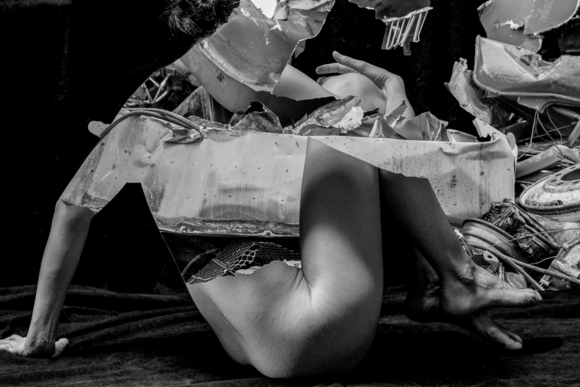
"Junkyard Nude Ser 16, No5"
if($row['caption']!=""){?>
Nature offers formal structures. Junkyards offer manufactured structures. } ?>
if($row['bio']!=""){?>
Early background:
John’s mother would take him and his brothers to the Sierras when he was a kid. She would tell them stories of going on extended hikes with Ansel Adams into the back county. She explained why his photographs were special. John didn’t understand at the time why this was so but landscape photography was to become a major pursuit later in his life. It was when he was photographing in the Himalayas that he started to understand what Adams was trying to communicate.
HIs parents were friends of Imogen Cunningham and hired her to take family pictures of him and his brothers. During one occasion, in a park in San Francisco, a child suddenly appeared from behind the bushes. Cunningham spun around with her camera and before she could get the shot the child disappeared. John never understood what that moment was about until much later in his life.
Later:
In the sixties abstract expressionism had a strong influence on John: Hans Hoffman, Willem de Kooning, Pollack.
In the seventies the more formal abstract painters fascinated him: Frank Stella, Cy Twombly, Brice Marden.
In the nineties photography replaced painting as a way to express his ideas. He taught himself photography partly with the use of 4x5 view camera.
Today:
Even though he works entirely in the digital world landscape photography and painting are still inside of him and are reflected in his current work.
In art school, when John got to a stumbling block John’s the teacher would say, “Go back to nature.†For him nature holds answers to heighten visual experience.
The stronger works have their own inner logic: his work is deeply rooted in the painterly tradition of abstract expressionism. He pursues visual language created between the subject matter and the random non-figurative forms.
} ?>
|
